
In 2017, we made one of the biggest changes we’ve ever made to our garden: we ripped out our old system and committed to building permanent raised beds. At that point, we were six growing seasons into gardening in the same space. We knew our soil. We knew our climate. And we knew, very clearly, what wasn’t working.
Eventually, we admitted what was obvious: if we wanted to keep gardening long-term, something had to change. Fresh soil. Physical separation from the ground. A system that worked with us instead of against us. That was the moment we decided to invest in raised beds that were meant to last.
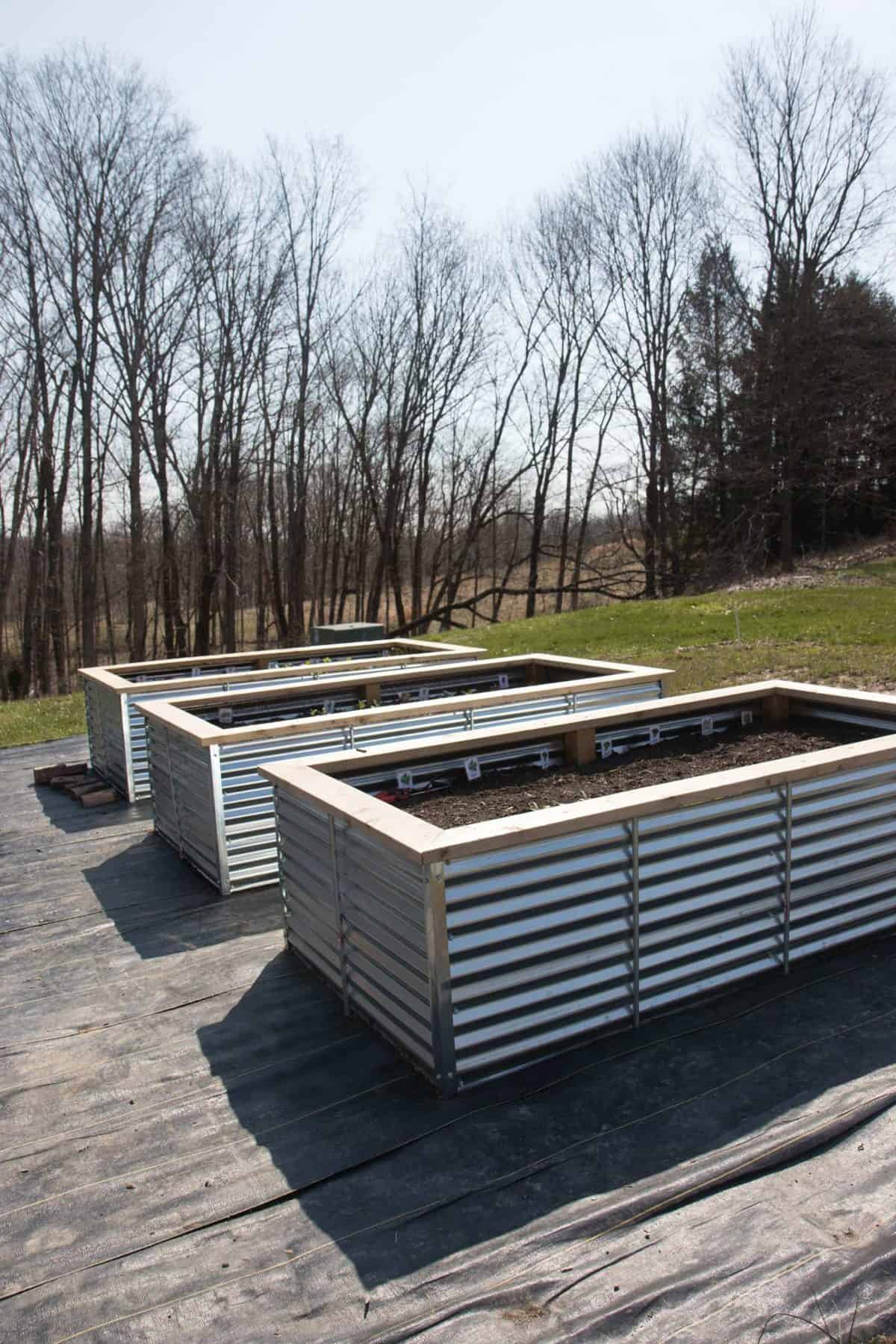
Table of Contents
Why We Chose Raised Beds in the First Place
We’ve grown in raised beds for years at various properties, and the benefits were already clear to us.
Raised beds give you control. Over soil quality. Over drainage. Over fertility. Over weeds and pests. They also make garden work easier on your body, especially when the beds are tall enough to reduce bending and kneeling.
That said, raised beds aren’t a perfect solution. They reduce total growing space, and they require an upfront investment. There’s no getting around that. But for us, the tradeoff was worth it. We weren’t trying to maximize plant count at all costs. We were trying to build a garden we could still enjoy years down the road.
Choosing the Right Materials (and Ruling a Lot of Them Out)
Once we committed to raised beds, the next question was what to build them from. We went down every rabbit hole imaginable and ruled out plenty of options along the way.
Treated lumber was the cheapest option, and it’s what our earlier beds were made from. But, at the time, we weren’t comfortable with the idea of treated wood sitting in direct contact with the soil we planned to grow food in for decades. We’ve loosened a bit on this stance over the years, because we’ve learned that in 2004, the treatment process for most treated lumber changed making it much less toxic.
Cedar was the obvious next choice. It’s beautiful, naturally rot-resistant, and widely used in gardens. Unfortunately, building beds at the height we wanted using all cedar pushed the cost far beyond what we could justify. Also, while cedar is rot-resistant, it’s not rot-proof. Cedar, especially when exposed to the elements or below grade, has a life of about 10 years.
We also explored steel planters and steel-framed beds, inspired by the sleek corten steel beds popping up everywhere online. While gorgeous, they were either far too expensive or required complicated framing systems that brought us right back to treated lumber.
We also checked out the seemingly thousands of cheap-made corrugated panel raised beds found on Amazon, and found them to be too flimsy for what we wanted.
What finally clicked was combining materials.
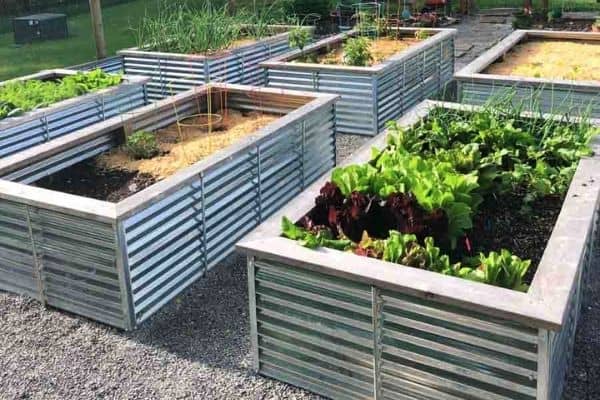
Galvanized steel panels are affordable, durable, readily available, and long-lasting. With the right support system, they don’t bow, they don’t rot, and they don’t need replacing every few years.
After a lot of research and tinkering, Craig designed a system that used galvanized steel panels paired with sealed cedar or treated lumber supports and galvanized conduit for reinforcement. No bulky exterior frame. Clean lines. Strong structure.
That combination became the foundation of the raised beds we still use today nearly a decade later.
What It’s Been Like Growing in These Beds for Almost a Decade
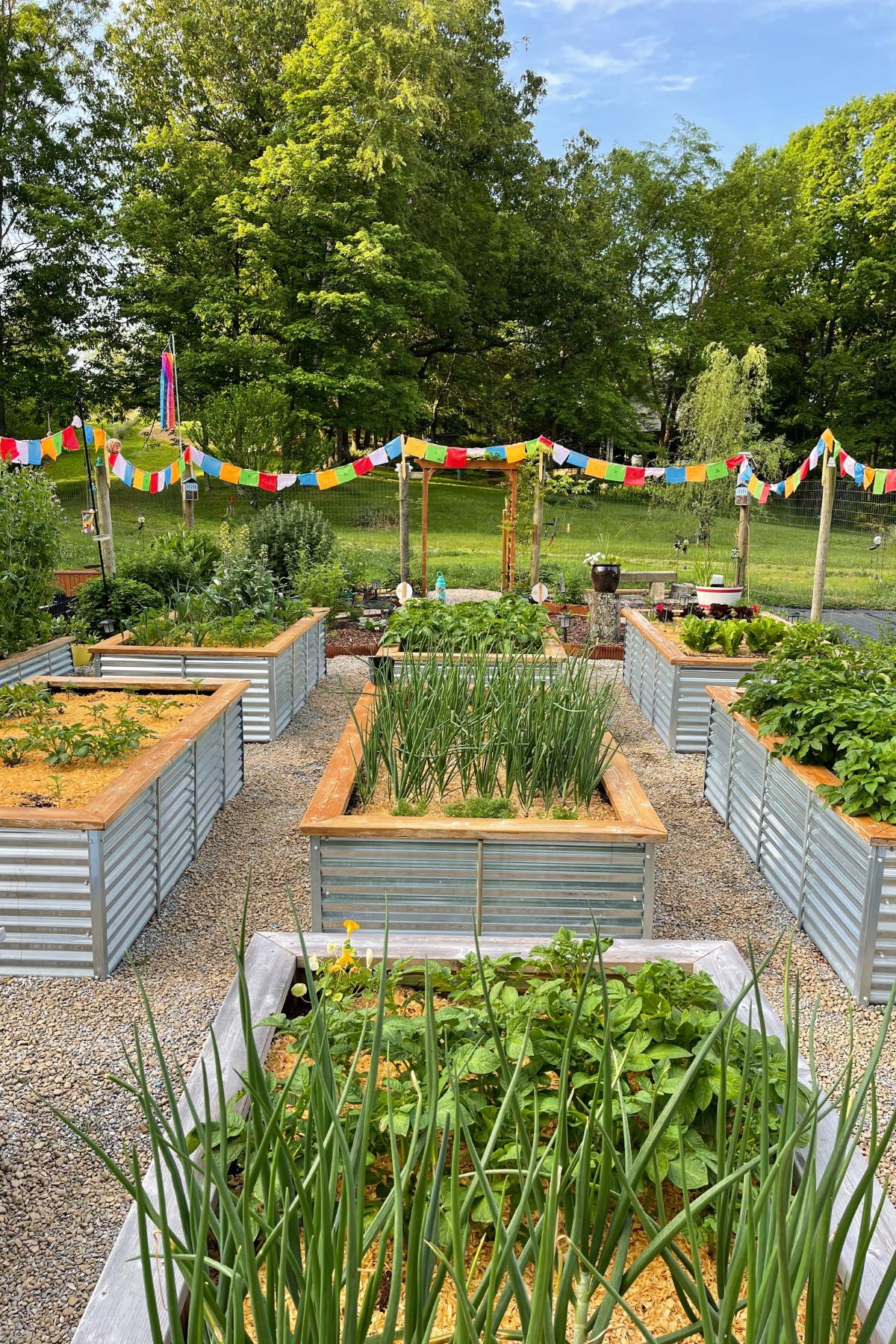
We built our beds 26 inches tall. That decision was intentional. Yes, they were easier on our backs and knees when we first built them. But more importantly, we were thinking long-term, and I’m glad we thought that far ahead. Because 42 year old me has an entirely different body from the 33 year old me who built these beds.
Beyond that, deep soil has been one of the biggest wins. Root crops thrive. Moisture stays more consistent. Plants are happier than they ever were in our native soil. Are they expensive to fill? Absolutely. But soil is a one-time investment, and we’ve found it’s worth doing right.
Nine growing seasons later, the beds are still structurally solid. The steel panels are holding up beautifully. We have seen some wear in the cedar supports below grade, and now in these plans, we recommend folks either use treated lumber supports or seal their cedar supports with below-grade sealant. These are the exact plans we’ve refined and used over the years.
The 2 Things We’d Change About These Raised Beds
After growing in these for 9 seasons, we honestly love our raised beds, but there are two things we’d change (and both of these items are noted in the plans for these beds).
- If we were building again, we’d seal the buried 4′ x 4′ supports with a below grade sealant or use treated lumber to extend their life even further from 10 years to closer to 15-20. They are 9 years old now, and still holding strong, but we can see where the corner supports will need to be replaced in the next 2-3 years from us originally using untreated cedar below the soil line. We do not recommend using untreated cedar below the soil line.
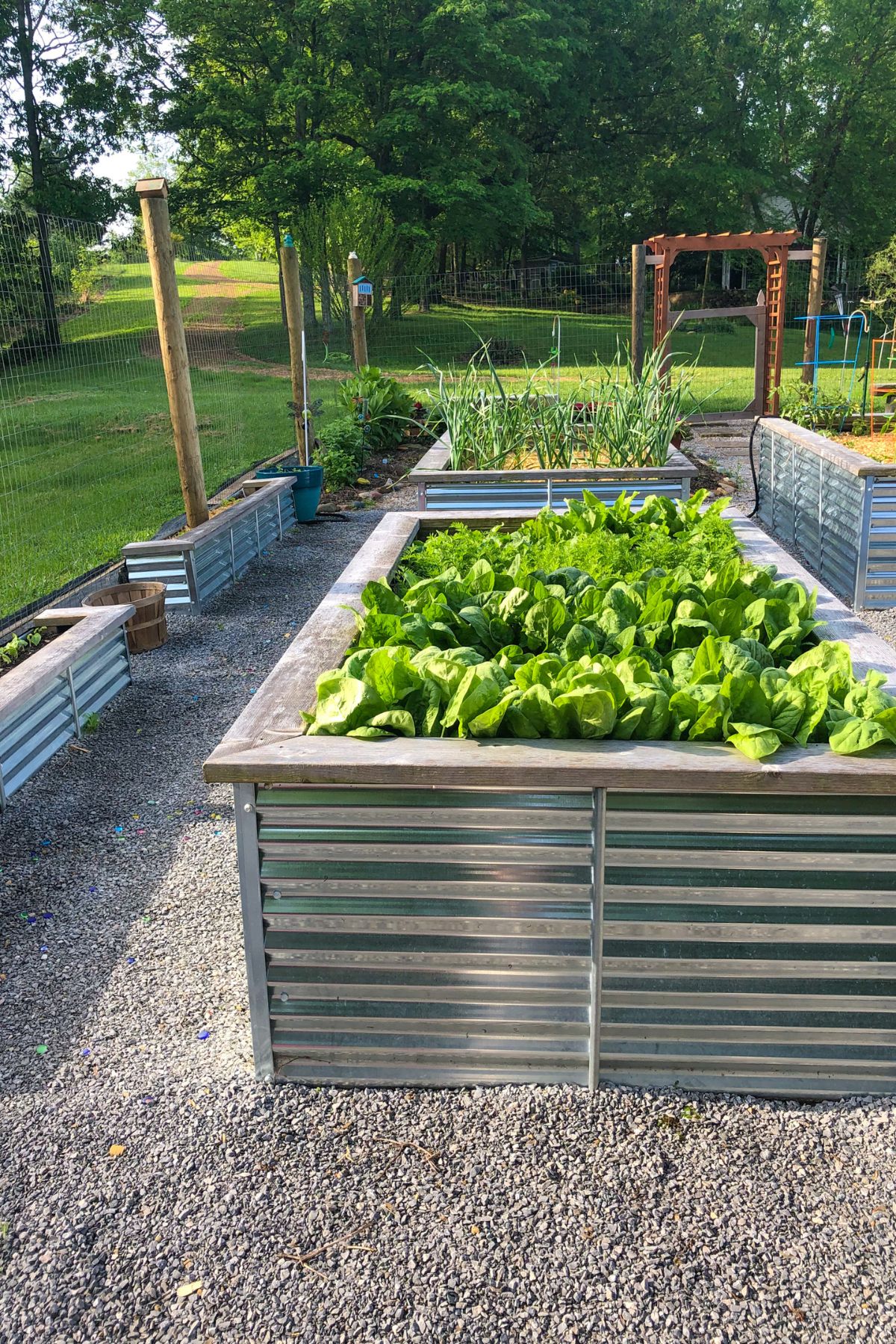
- We’d make the space between the beds wider. We only did 30″ aisles, and I highly recommend at least 36″ on all sides.
Answering some FAQs about our raised beds
Do galvanized steel beds get too hot in summer?
Surprisingly, no. Because the steel is reflective, it doesn’t absorb heat the way darker materials do. Even during hot Midwestern summers, the soil in our beds often stays cooler than other containers, and we haven’t had issues with root damage or increased watering needs.
How long do these beds last?
The steel panels and conduit should last for decades. Untreated cedar components are expected to last 10 plus years, depending on soil conditions and climate. We do recommend using either treated wood or sealing the 4’x4′ cedar supports with a below-grade sealer to get more than 10 years out of these beds.
Why are the beds so deep?
The extra depth makes gardening easier on your back and knees and gives plants more room to develop strong root systems. Root crops, in particular, thrive with the added soil space.
Will galvanized steel leach into the soil?
Galvanized steel is coated with zinc to prevent rust. In neutral garden soils, zinc leaching is minimal and well below levels considered harmful to plants or people. After multiple seasons of growing food in these beds, we’ve had healthy plants, healthy soil test results, and no signs of issues related to the steel.
Are raised beds worth the cost?
For us, yes. The upfront cost is higher, especially for soil, but it’s a long-term investment. We spend far less time weeding, have better control over our soil, and enjoy gardening more overall.
Can these beds be used with cold frames?
Absolutely. We intentionally left space at the top of the beds so they can be easily cold-framed with simple greenhouse panels laid flat on top with some bricks on the sides to hold it down, which helps extend the growing season with minimal effort. These 3-Season tents also happen to fit perfectly on top of the beds!
Why aren’t the plans free anymore?
When we first built these beds, we shared the original plans for free. Over the past nine years, though, we’ve continued refining the design, building more beds, and learning what works best long-term. The current plans include clearer instructions, additional details, and updates based on years of real-world use. They’re designed to save you time, prevent costly mistakes, and give you a solid, long-lasting garden setup, which is why they’re now offered as a paid resource.
👉 Ready to build raised beds you won’t regret five or ten years from now? the exact plans we’ve refined and used over the years

Very nice looking! Would the galvanized roof edge provide enough corner support if I skipped the 4×4 (and also skipped the 2×6 cap piece)? That seems to be how commercial rectangular metal beds are put together, using bolts and wingnuts.
No, the roof edge is purely aesthetic, so you need the 4×4 for structure.
Great build plans. I’m laying out my garden and planning for next year. Are rodents able to access your garden beds from the outside of the bed. I will need deer fencing where I live but am wondering if I could avoid fencing for smaller critters around the perimeter. Thanks in advance for your thoughts.
We haven’t had any problems with it, but we also have acres of other rodent food that is easier to access (oak trees, hickory trees, etc) so that could be why
Just finished my first. Wish I could post pics. Looks great. Thank you sooooo much for this post. About $240 for materials. An addition $50 for a layer of pond rocks on the bottom. I used tractor front loader to steal about 2/3 of the dirt from an unneeded birm and then added compost instead of buying virgin top soil. Gonna make three more this year. .
So glad the build went well. Happy growing!
Thank you for sharing your cost
You all put lots of hard work into the concept, plans and lessons learned – thank you!
I’m not sure I follow why you can’t grow tomatoes in there?
You can, but some tomato varieties get so tall that it can be hard to harvest from the tops when the beds are this tall. We prefer shorter beds for tall plants like tomatoes!
Thanks for the tutorial on raised garden beds. I plan on doing it exactly like you said. So your tutorial just confirmed my plans. The only thing I hadn’t thought about was using the conduit for strengthening the walls. I’am using landscape timber’s for the post’s.👌😎
This is a WONDERFUL article. I am going to build these beds. How many beds do you have now? What is a typical harvest? There are 5 people in my house but I would love to give to neighbors also. Will 4 beds give me a big enough yield or should I build more?
I have 9 of these raised beds, and the yield depends a lot on what you want to grow. For example, you can fill a single bed with one watermelon plant that can give you 2-3 watermelons, or you can fill it with lettuce greens that’ll give you enough salads for the entire neighborhood! I would start with 4 and see what it does for your family—you can always add on more.
What gauge metal did you use? 31 ga was all I can find at box stores so I bought enough to double the sheets but did double the cost. The 31 ga just seemed paper thin. By doubling, equilivent to 25 ga. Cost definitely higher. Yesterday treated 4×4 post 22.00 each, 2×6 treated 24.00 each, 31 ga metal sheets 22.00 each.
We used the 31 ga!
We have the materials being delivered in a couple days to build two of the 4’x8’ beds. Really cool design you came up with. Thank you for sharing. How many yards of dirt did you use for 2 beds please?
Our soil calculator should help! https://growfully.com/interactive-free-soil-calculator/
Do you have an idea of what the price to build is now? We’re going to build these as community gardens at our school and have to create a tight budget to follow.
We haven’t calculated recently, but I do know the price of lumber has gone up in the past 2 years during the pandemic. Hopefully it goes back down soon!
Cost us about $545 for the materials to build two beds. Hope to be putting them together this coming week.
Is the 26” length of the 4×4’s a typo? I’m not sure how the 4’ galvanized sheets will match up like the photos!
The 26″ is the height of the 4′ galvanized sheets!
I just built one of these, or rather an in the process. Great guide, thanks for sharing
Always glad to hear this. Happy growing!!
I am thinking of making two 4’x4’ beds like this. How necessary is the conduit in your 4’ sections?
We use one piece of conduit on the 4′ sections to prevent bowing—I wouldn’t feel comfortable without them.
We have almost no dirt….on top of rocky, bedrock type ground. There is no way of hammering anything 6 inches into the ground, without taking out lots of rocks, leaving an unstable spot for the conduit. Any ideas as to how to provide support without hammering conduit?
You could try putting a frame of 4x4s inside the bed to stabilize it!