
In 2017, we made one of the biggest changes we’ve ever made to our garden: we ripped out our old system and committed to building permanent raised beds. At that point, we were six growing seasons into gardening in the same space. We knew our soil. We knew our climate. And we knew, very clearly, what wasn’t working.
Eventually, we admitted what was obvious: if we wanted to keep gardening long-term, something had to change. Fresh soil. Physical separation from the ground. A system that worked with us instead of against us. That was the moment we decided to invest in raised beds that were meant to last.
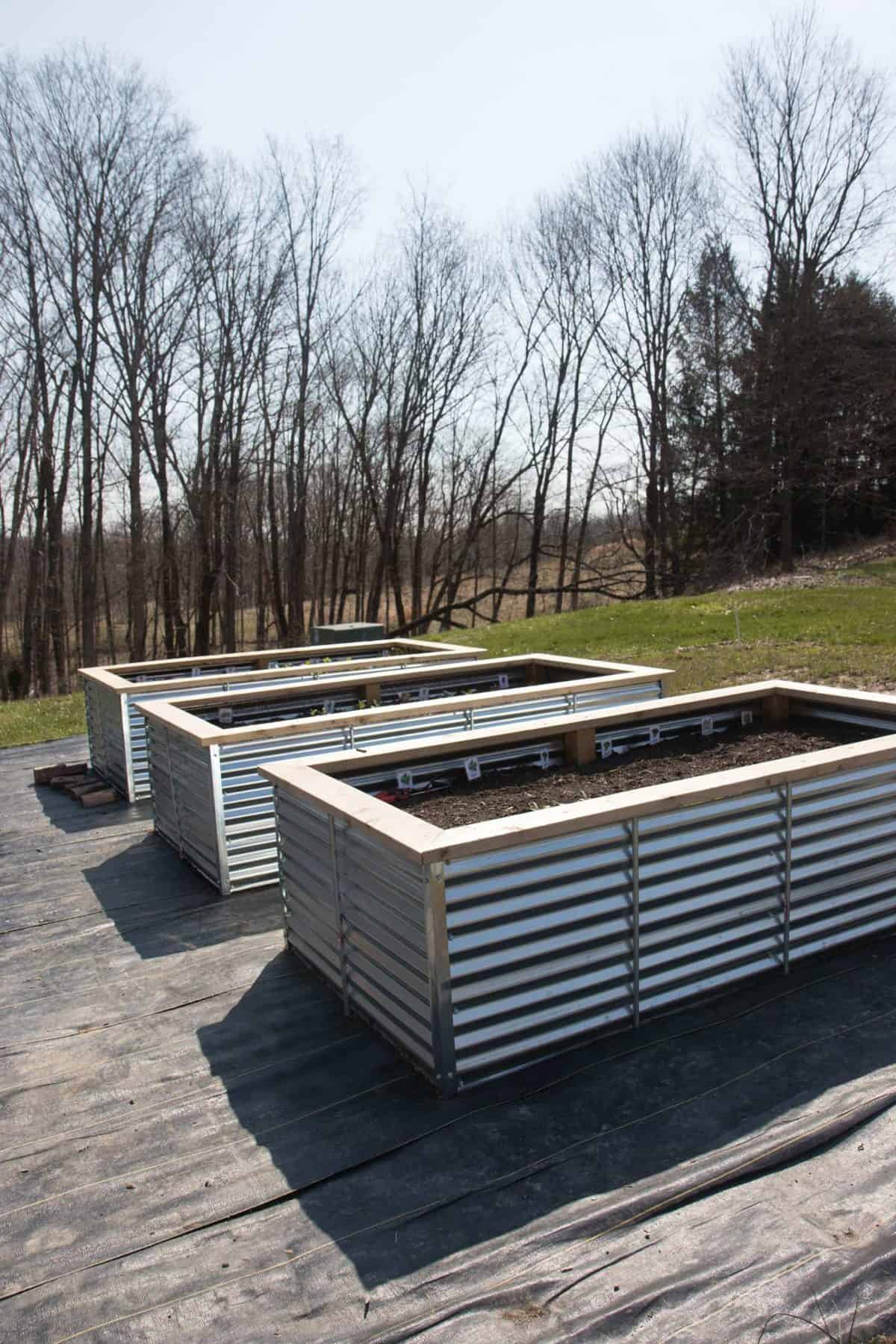
Table of Contents
Why We Chose Raised Beds in the First Place
We’ve grown in raised beds for years at various properties, and the benefits were already clear to us.
Raised beds give you control. Over soil quality. Over drainage. Over fertility. Over weeds and pests. They also make garden work easier on your body, especially when the beds are tall enough to reduce bending and kneeling.
That said, raised beds aren’t a perfect solution. They reduce total growing space, and they require an upfront investment. There’s no getting around that. But for us, the tradeoff was worth it. We weren’t trying to maximize plant count at all costs. We were trying to build a garden we could still enjoy years down the road.
Choosing the Right Materials (and Ruling a Lot of Them Out)
Once we committed to raised beds, the next question was what to build them from. We went down every rabbit hole imaginable and ruled out plenty of options along the way.
Treated lumber was the cheapest option, and it’s what our earlier beds were made from. But, at the time, we weren’t comfortable with the idea of treated wood sitting in direct contact with the soil we planned to grow food in for decades. We’ve loosened a bit on this stance over the years, because we’ve learned that in 2004, the treatment process for most treated lumber changed making it much less toxic.
Cedar was the obvious next choice. It’s beautiful, naturally rot-resistant, and widely used in gardens. Unfortunately, building beds at the height we wanted using all cedar pushed the cost far beyond what we could justify. Also, while cedar is rot-resistant, it’s not rot-proof. Cedar, especially when exposed to the elements or below grade, has a life of about 10 years.
We also explored steel planters and steel-framed beds, inspired by the sleek corten steel beds popping up everywhere online. While gorgeous, they were either far too expensive or required complicated framing systems that brought us right back to treated lumber.
We also checked out the seemingly thousands of cheap-made corrugated panel raised beds found on Amazon, and found them to be too flimsy for what we wanted.
What finally clicked was combining materials.
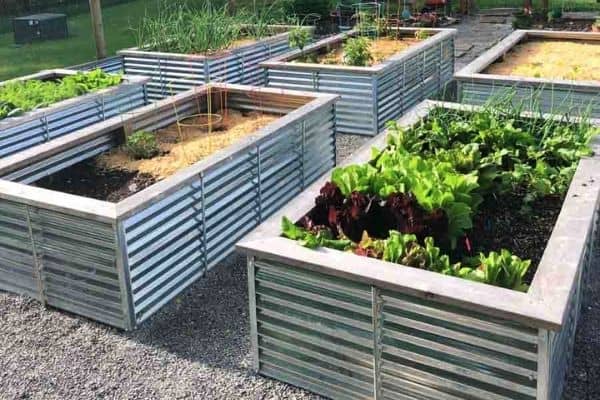
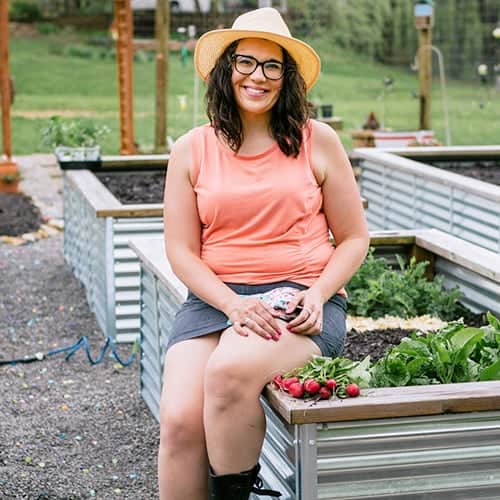
Galvanized steel panels are affordable, durable, readily available, and long-lasting. With the right support system, they don’t bow, they don’t rot, and they don’t need replacing every few years.
After a lot of research and tinkering, Craig designed a system that used galvanized steel panels paired with sealed cedar or treated lumber supports and galvanized conduit for reinforcement. No bulky exterior frame. Clean lines. Strong structure.
That combination became the foundation of the raised beds we still use today nearly a decade later.
What It’s Been Like Growing in These Beds for Almost a Decade
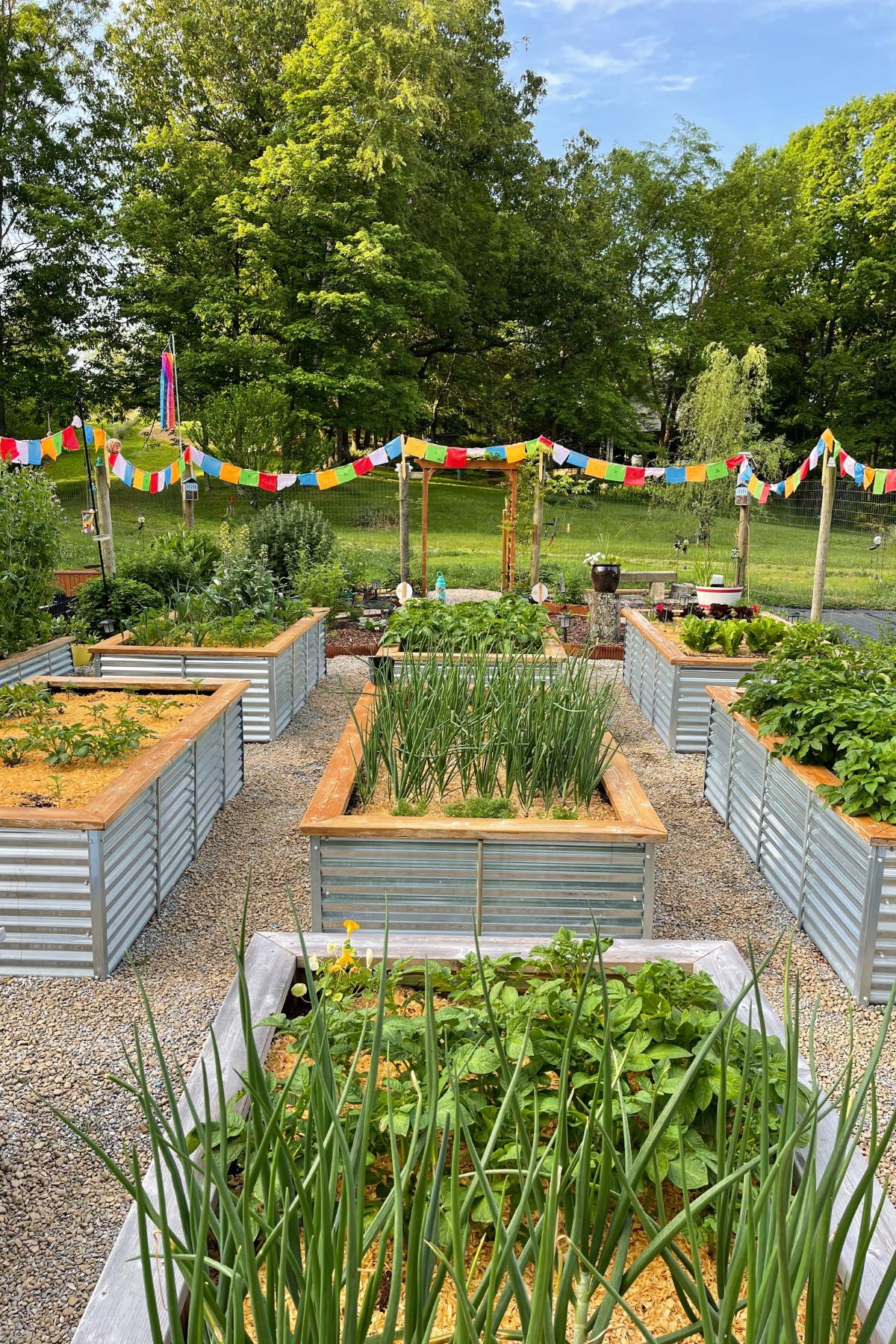
We built our beds 26 inches tall. That decision was intentional. Yes, they were easier on our backs and knees when we first built them. But more importantly, we were thinking long-term, and I’m glad we thought that far ahead. Because 42 year old me has an entirely different body from the 33 year old me who built these beds.
Beyond that, deep soil has been one of the biggest wins. Root crops thrive. Moisture stays more consistent. Plants are happier than they ever were in our native soil. Are they expensive to fill? Absolutely. But soil is a one-time investment, and we’ve found it’s worth doing right.
Nine growing seasons later, the beds are still structurally solid. The steel panels are holding up beautifully. We have seen some wear in the cedar supports below grade, and now in these plans, we recommend folks either use treated lumber supports or seal their cedar supports with below-grade sealant. These are the exact plans we’ve refined and used over the years.
The 2 Things We’d Change About These Raised Beds
After growing in these for 9 seasons, we honestly love our raised beds, but there are two things we’d change (and both of these items are noted in the plans for these beds).
- If we were building again, we’d seal the buried 4′ x 4′ supports with a below grade sealant or use treated lumber to extend their life even further from 10 years to closer to 15-20. They are 9 years old now, and still holding strong, but we can see where the corner supports will need to be replaced in the next 2-3 years from us originally using untreated cedar below the soil line. We do not recommend using untreated cedar below the soil line.
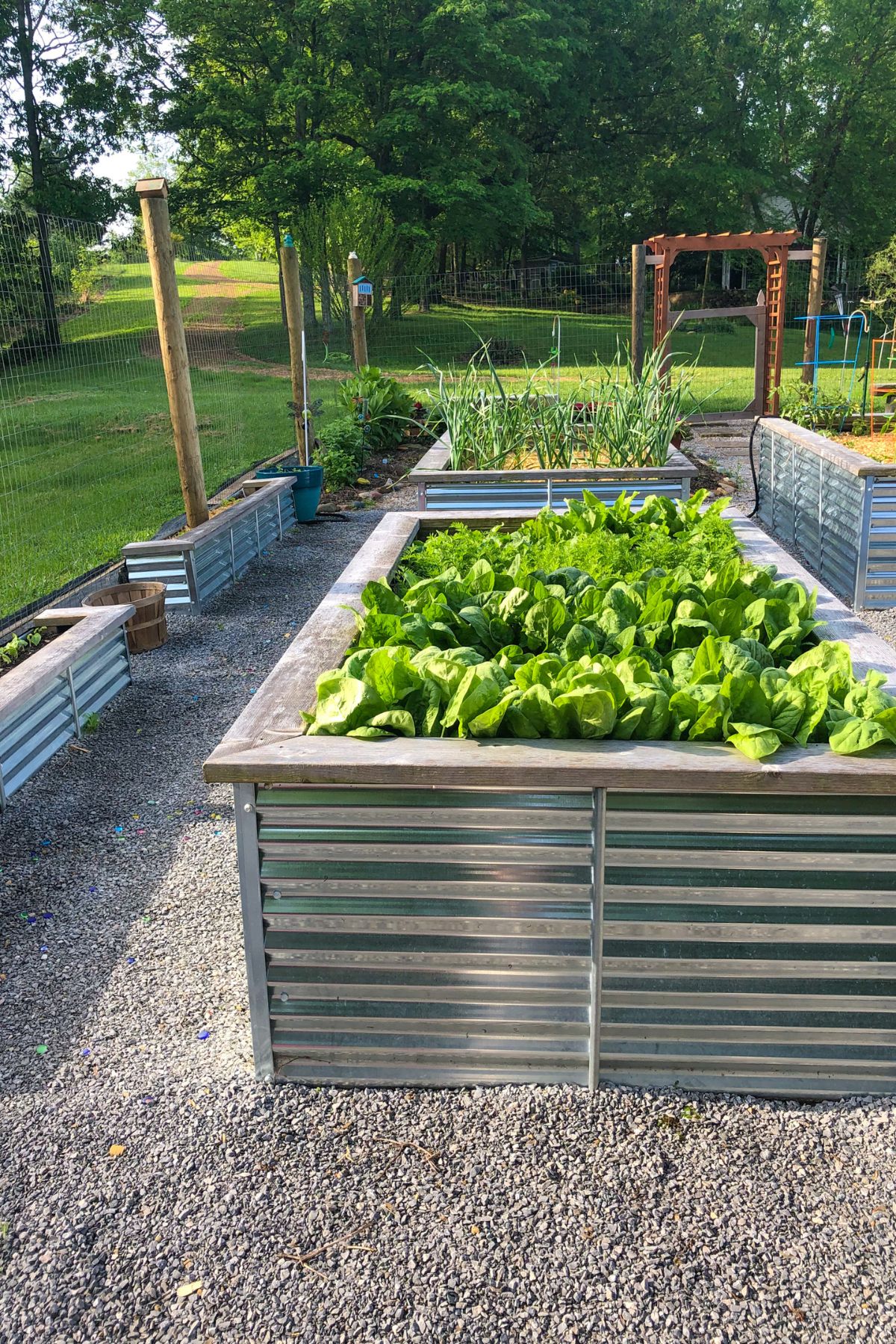
- We’d make the space between the beds wider. We only did 30″ aisles, and I highly recommend at least 36″ on all sides.
Answering some FAQs about our raised beds
Do galvanized steel beds get too hot in summer?
Surprisingly, no. Because the steel is reflective, it doesn’t absorb heat the way darker materials do. Even during hot Midwestern summers, the soil in our beds often stays cooler than other containers, and we haven’t had issues with root damage or increased watering needs.
How long do these beds last?
The steel panels and conduit should last for decades. Untreated cedar components are expected to last 10 plus years, depending on soil conditions and climate. We do recommend using either treated wood or sealing the 4’x4′ cedar supports with a below-grade sealer to get more than 10 years out of these beds.
Why are the beds so deep?
The extra depth makes gardening easier on your back and knees and gives plants more room to develop strong root systems. Root crops, in particular, thrive with the added soil space.
Will galvanized steel leach into the soil?
Galvanized steel is coated with zinc to prevent rust. In neutral garden soils, zinc leaching is minimal and well below levels considered harmful to plants or people. After multiple seasons of growing food in these beds, we’ve had healthy plants, healthy soil test results, and no signs of issues related to the steel.
Are raised beds worth the cost?
For us, yes. The upfront cost is higher, especially for soil, but it’s a long-term investment. We spend far less time weeding, have better control over our soil, and enjoy gardening more overall.
Can these beds be used with cold frames?
Absolutely. We intentionally left space at the top of the beds so they can be easily cold-framed with simple greenhouse panels laid flat on top with some bricks on the sides to hold it down, which helps extend the growing season with minimal effort. These 3-Season tents also happen to fit perfectly on top of the beds!
Why aren’t the plans free anymore?
When we first built these beds, we shared the original plans for free. Over the past nine years, though, we’ve continued refining the design, building more beds, and learning what works best long-term. The current plans include clearer instructions, additional details, and updates based on years of real-world use. They’re designed to save you time, prevent costly mistakes, and give you a solid, long-lasting garden setup, which is why they’re now offered as a paid resource.
👉 Ready to build raised beds you won’t regret five or ten years from now? the exact plans we’ve refined and used over the years
Love the design and how easy your tutorial makes it – unfortunately with the current times I was disappointed to find that it would cost $350 to build with how much materials have gone up.
Hopefully they will go back down again after the pandemic!
Any tips for moving one of these? 😅 first time growing veggies over the fall/winter and we built ours in a spot that doesn’t get enough sun 😞 so we need to move it. My original thought is to take one long side off and lay a tarp to catch the soil to drag to the new location? Obviously there will be shoveling and wheelbarrowing too but just curious if any other advice for this newbie!
We recommend shoveling all the soil onto a tarp or into a wheelbarrow. Once it is empty, it should be light enough for two people to carry! And then you can refill it once it is in its new home.
I’m getting ready to build 2 of these and was wondering if you put irrigation into your beds when you built them? If so, what did you use?
We have not put irrigation in ours yet!
Firstly I love this detailed page with all the instructions, photos, tips and lessons learned. It is wonderful that you chose to share this information. All of it was extremely informative and helpful. I am wondering if there is any benefit in fabricating one for over $350 versus buying one Vego for under $300 ready to assemble? I was looking at the 32in tall garden beds they sell. Granted those don’t have the cedar rails on top. I would appreciate any thoughts you might have. Thank you.
We liked building our own because we can customize the size and because the cedar rails make a comfortable spot to lean on/sit on while we are gardening. Demand has pushed up the price of a lot of materials, but in non-pandemic times, it is cheaper, too. But do what works for you!
I’m making my galvanized garden beds now from your site. I am putting the galvanized wire on the bottom because I too have a bad mole problem. Did you just lay the wire down or connected it to the bed? I really need advice on this.
We just cut it to the size of the bottom of the bed, and then held it down with landscape staples.
Love this design! How would you attach hardware cloth to keep moles out?
Hi Teri, We just cut it to the size of the bottom of the bed, and then held it down with landscape staples!
Hi Cassie,
I like your idea to of raise bed with galvanize frames. I have unused Hurricane panel which is galvanized steel and lots of those are available from other neighbors who replace their window with hurricane sliding shutters or replace with impact window.
Do you think those panels can be used to make raise bed. I am planning to make two 6′ X 3′ raise bed for small plants and bubs. I do not have huge backyard so want to use available space.
Another question: should I put weed fabric if I build on top of existing lawn?
Appreciated your comment.
We don’t have any experience with hurricane panels, but as long as they are galvanized steel and they are a thick enough gauge to support the weight of the soil, I don’t see why they wouldn’t work. As for the weed fabric, we no longer use it below our raised beds– we use cardboard instead.
Very informative and well written! Well done, indeed, thank you! I plan to start construction on my beds next week following your directions.
Great idea
This is a very detailed account of raised beds and all the positives and negatives are laid out in details.
Thank you for sharing the whole experience.
I have made some bits as I’m leaning towards the raised beds.
Thank you.
What was your reasoning for cutting the conduit to 40 inches? Did you find shorter lengths did not hold in the ground as well?
We wanted to be able to pound it into the ground at least a foot to make sure it was stable.
Hi! Thank you so much for the detailed instructions and the full “how to” blog! I’m so excited to make these beds. I have a quick question that I hope you can help me with…. there seem to be three different types (strengths) of non-flexible conduit available: rigid, IMC, and EMT. Which type did you use? Any guidance you can provide is greatly appreciated!
This is what we used: https://www.menards.com/main/maintenance-repair-operations/lighting-electrical/wiring-connecting/conduit/wheatland-tube-company-1-2-x-10-rigid-conduit/3656286/p-1444446524265-c-6423.htm?tid=-8232237458874122894&ipos=2
Great tutorial! We’re moving and need to build a new garden space after 20 years!
I like the idea of the hardware cloth addition as we have moles and voles!
When you grow the same plant in the same bed every season, like tomatoes, do you heavily amend the beds? Do you worry about diease issues? Or do you rotate your tomatoes to the bean bed and do on? We are not as educated on testing the soil.
We rotate our crops whenever possible to avoid pests/diseases that may overwinter in the soil.
Hi, just built 2 of these beds and love them! Wondering if the conduit is just to help hold the bed in place or does it help with bulging from the dirt? Thanks
It helps keep the sides of the bed from bulging out!
Can’t wait to make 4 of these, but had a question about your cut list.
For the miter cuts, are you measuring the heel or the toe of the board? Never done angled cuts and I want to make sure I am cutting them to length.
P.S. Your email contact doesn’t work. I tried to contact you directly and after I try to submit it just says to contact the site admin.
Hi Brandon, the longest length of the board is what we are referencing in our measurements.
We built 4 of these boxes this spring and added arch trellises between them! Thank you so much! These plans were perfect! So detailed. I never would have been able to do this without your instructions!
We love to hear it! Happy planting!
Great article. Looking forward to buiding one this weekend. The price of cedar is super high, so I wondering if I could use a cheaper wood just for the top edge? If so, what would you recommend?
Yes, you could use regular treated wood, but we personally made the decision to keep treated wood away from our garden beds—but it’s definitely a more affordable option
Hi Cassie, just came upon your raised bed design and plans while surfing for ideas for raised bed gardening. I had a couple other ideas in mind, started looking in January, and had narrowed the list down to 3. Your designs have replaced them all. I have never seen such thorough plans (with perfectly detailed instructions, btw,) EVER!! They’re on my to-do list for later this year so I can be ready for next spring. Thanks!
Glad we could help- happy building!
Hi! Thank you for these instructions, they are great!
Regarding the self drill screws, do they have a sharp point? Any particular # used? Looking in my local store, but there are too many options. If you could include a link it would be great.
Happy gardening!
Yes, they have a sharp point. This is what we used: https://www.menards.com/main/hardware/fasteners-connectors/screws/self-drilling-scre%5B…%5D95/p-1444437347240-c-8935.htm?tid=9087991764144578264&ipos=28
Hi guys, beautiful beds. Just a quick question – what gauge is the corrugated sheet metal?
Thank you
Pavel
We used 31 gauge
Hi Cassie,
Perhaps I missed this in the instructions, but how did you get the steel to the sizes you needed? Looking to do some DIY beds in our yard.
You can use tin snips or a circular saw to cut the panel in half for the shorter sides.